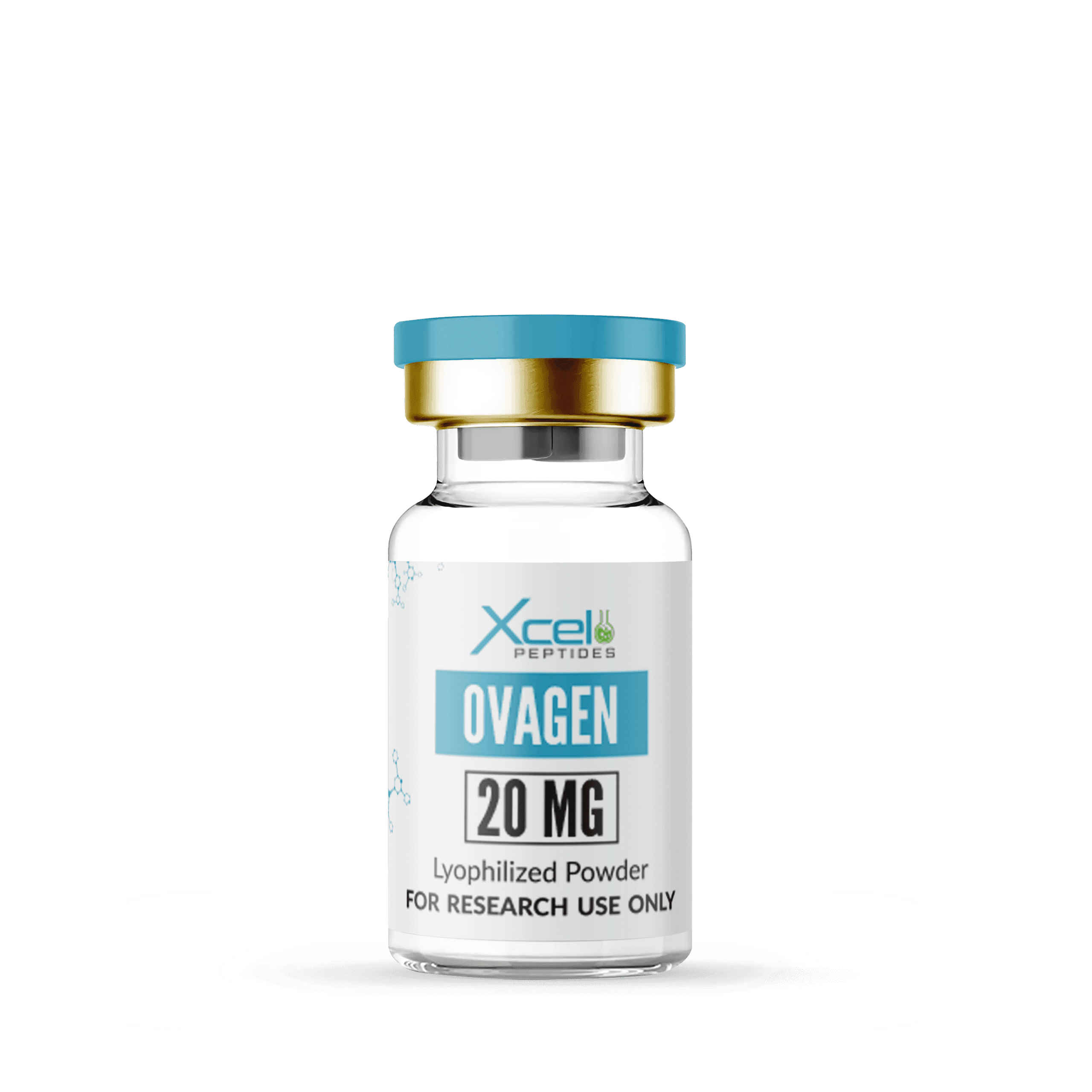
Ovagen (Bioregulator)
Fr 70
Liver Regeneration Models – Promoting faster recovery after chemically induced injury.
Detoxification Studies – Evaluating how liver cells manage oxidative and chemical stress.
Age-Related Hepatic Decline – Investigating peptide effects on elderly tissue models.
Digestive System Support – Studying interactions between liver function and gut health.
Post-Surgical Recovery Models – Observing cellular repair following partial hepatecto
Ovagen (Bioregulator) – Advanced Research Peptide for Liver Health and Regeneration
Ovagen (Bioregulator) is a specialized peptide complex designed for advanced scientific research focusing on liver regeneration, tissue protection, and cellular repair. As a bioregulator peptide, Ovagen is derived from natural sources and formulated to target peptide sequences involved in restoring organ-specific protein synthesis. This makes it a subject of interest in preclinical studies exploring liver function, detoxification processes, and age-related changes in hepatic tissue.
In this guide, we will explore what Ovagen is, how it works in research settings, potential areas of application, benefits observed in studies, and important considerations for laboratory use.
What is Ovagen (Bioregulator)?
It is part of the cytogen peptide bioregulator family — short peptide chains that are believed to regulate protein synthesis at the cellular level. Each bioregulator targets specific tissues or organ systems. In the case of Ovagen, its peptide sequence is aimed at liver cells (hepatocytes) and other digestive system components.
Researchers value Ovagen for its potential role in supporting liver detoxification pathways, improving cellular metabolism, and aiding in the regeneration of damaged tissue. These properties make it a strong candidate for studies involving toxin exposure, liver injury models, and age-associated decline in organ function.
How Ovagen Works – Research Perspective
From a research standpoint, Ovagen is believed to interact with the genetic machinery of liver cells, potentially restoring the production of key proteins required for healthy function. Preclinical investigations suggest that peptide bioregulators may:
Improve RNA and DNA synthesis in targeted cells.
Stimulate enzyme activity for detoxification.
Support cell membrane stability during oxidative stress.
Reduce the accumulation of toxic metabolites in liver tissue.
This targeted approach may explain why Ovagen is of growing interest in experimental settings exploring regenerative medicine and organ-specific peptide therapy.
Potential Research Applications
In laboratory studies, It has been examined in contexts such as:
Liver Regeneration Models – Promoting faster recovery after chemically induced injury.
Detoxification Studies – Evaluating how liver cells manage oxidative and chemical stress.
Age-Related Hepatic Decline – Investigating peptide effects on elderly tissue models.
Digestive System Support – Studying interactions between liver function and gut health.
Post-Surgical Recovery Models – Observing cellular repair following partial hepatectomy.
7 Potential Benefits Noted in Research
While Ovagen is not intended for human or veterinary use, preclinical data points to several potential benefits in research environments:
Targeted Hepatic Support – Acts specifically on liver cells for organ-focused results.
Enhanced Protein Synthesis – Supports the production of functional proteins in hepatocytes.
Oxidative Stress Reduction – May limit damage from free radicals and toxins.
Improved Cellular Repair – Promotes regeneration after injury or stress.
Metabolic Efficiency – Supports liver’s role in nutrient metabolism.
Toxin Clearance Support – Assists in breakdown and elimination of harmful substances.
Age-Related Protection – Maintains liver function in aging tissue models.
3 Key Risks & Considerations in Research
Like any peptide bioregulator, Ovagen has limitations and requires careful study design:
Incomplete Mechanistic Data – Mode of action in humans is not fully understood.
Variable Results – Outcomes may differ based on model type and dosage.
Limited Long-Term Studies – More research is needed to assess prolonged exposure.
Storage & Handling
To maintain peptide stability, Ovagen should be stored in a cool, dry place away from direct sunlight. Lyophilized (freeze-dried) peptides should be kept at low temperatures, and reconstituted solutions should be used promptly in research procedures.
Conclusion
It is an intriguing peptide for researchers focused on liver health, regeneration, and detoxification pathways. Its targeted action on hepatocytes offers a unique angle for studies exploring organ-specific peptides and regenerative science. While results so far are promising, continued preclinical trials will help determine the full potential and safety profile of Ovagen in various experimental models.
Be the first to review “Ovagen (Bioregulator)”
Related products
PEPTIDE
PEPTIDE
PEPTIDE
PEPTIDE
PEPTIDE
PEPTIDE

PEPTIDE
Reviews
There are no reviews yet.